| Sources |
- [S394] Ancestry.com, Public Member Trees, (Name: Ancestry.com Operations, Inc.; Location: Provo, UT, USA; Date: 2006;), Database online., Skinner/Schinzel-Ahlemeyer/Haines Tree J_Ahlemeyer.
Record for Hendrickje Ant Swartwout
Family name history
If we are all descendents of the same Tomys Swartwout, how did we end up with so many variations of the spelling of the name? There are a number of factors that could have affected the spelling that your branch happens to be currently using.
A footnote in Chapter 1 of the Swartwout Chronicles provides the following: Zwarte, also written swarte, a Dutch adjective, meaning black, and agreeing with the neuter substantive woude, also written wout, of the same language, signifying a wood or forest. There is also a Dutch noun, hout, expressing wood or timber as material. The Dutch words woud and hout are closely allied in meaning to the German terms wold or wald, and holt or holz.
It was the early census takers that really split the family up. They used their phonetic capabilities to write down the name as the head of the family said it. Dutch accents would have their impact on what was heard. And once they wrote it down for one family, they would use the same spelling with any of the related families they ran across. Of course, the census taker on the other side of the village or county may have written it differently, splitting the family on the spelling.
The first several generations of the family spoke Dutch and their records are recorded in that language. Some of the earliest written records we have in English are found in the 1790 census. In many of the following generations the number of individuals that may have been illiterate would have been higher, and many still would not have been comfortable speaking English. What the census taker wrote down could have been the first time they saw the name in print. It would have been this spelling that people would have used when applying for their Veterans' and Widows Benefits from the Revolutionary War or copied down in the family Bible.
The spelling Swartwout when heard in the Low Dutch Tongue, sounded like Swartwoudt and anyone not familiar with the Low Dutch Tongue, could easily hear it as Swartwood. In the early days of America, many people spelled words as they sounded. So the name Swartwout was often translated and written down as Swartwood. Given the close meanings and the very similar sounds, it's pretty easy to see how a census taker could have readily chosen any one of the four options. A breathy h or w would be easily missed, or the writer may have been attempting to Anglicize the name by changing the word to its English equivalent of wood.
Zwartewoude or Zwartewold, the present tract of land bearing that name, is described as lying in the canton of Holwerd, arrondissement of Leeuwarden, district of Ferwerderadeel, quarter of Oostergoo, in the province of Friesland, bordering northwest on the highway from Hijum to Hallum, northeast on the Hallum canal, southeast on the Hallum meadows, and southwest on the Hallum lake, and having an area of five English acres and certain fractions of an acre.
Some families changed the name for convenience. I have heard a story of one man that was tired of his mail getting mixed up with the Swarthout down the street, so he dropped the H to make it easier for the mailman! And I have now communicated with an individual who changed her name from Swartwout to the literal translation of Blackwood!
ronsand31 added this on 16 Nov 2010
bdgierke originally submitted this to Gierke Family Tree on 12 Jul 2010
- [S394] Ancestry.com, Public Member Trees, (Name: Ancestry.com Operations, Inc.; Location: Provo, UT, USA; Date: 2006;), Database online., Skinner/Schinzel-Ahlemeyer/Haines Tree J_Ahlemeyer.
Record for Annetie Barentse VanRotmers
- [S394] Ancestry.com, Public Member Trees, (Name: Ancestry.com Operations, Inc.; Location: Provo, UT, USA; Date: 2006;), Database online., Skinner/Schinzel-Ahlemeyer/Haines Tree J_Ahlemeyer.
Record for Albert Andriessen Bradt
- [S565] SAR Membership Applications, 1889-1970, (Name: Ancestry.com Operations, Inc.; Location: Provo, UT, USA; Date: 2011;), Volume: 117; SAR Membership Number: 23310.
Record for Bernadus Swartwout U.S., Sons of the American Revolution Membership Applications, 1889-1970 about Bernadus Swartwout Name: Bernadus Swartwout SAR Membership: 23310 Father: Roeloff Swartwout Mother: Eva Albertse Bradt Spouse: Rachel Schapmoors (Rachel? jcw20141102) Children: Abraham Swartwout Source Citation: Volume: 117; SAR Membership Number: 23310.
U.S., Sons of the American Revolution Membership Applications, 1889-1970 about Bernadus Swartwout
Name: Bernadus Swartwout
SAR Membership: 23310
Father: Roeloff Swartwout
Mother: Eva Albertse Bradt
Spouse: Rachel Schapmoors
Children: Abraham Swartwout
Source Citation: Volume: 117; SAR Membership Number: 23310.
Source Information: Ancestry.com. U.S., Sons of the American Revolution Membership Applications, 1889-1970 [database on-line]. Provo, UT, USA: Ancestry.com Operations, Inc., 2011.
Original data: Sons of the American Revolution Membership Applications, 1889-1970. Louisville, Kentucky: National Society of the Sons of the American Revolution. Microfilm, 508 rolls.
- [S394] Ancestry.com, Public Member Trees, (Name: Ancestry.com Operations, Inc.; Location: Provo, UT, USA; Date: 2006;), Database online., Skinner/Schinzel-Ahlemeyer/Haines Tree J_Ahlemeyer.
Record for Eefjen Eva Swartwout
- [S394] Ancestry.com, Public Member Trees, (Name: Ancestry.com Operations, Inc.; Location: Provo, UT, USA; Date: 2006;), Database online., Skinner/Schinzel-Ahlemeyer/Haines Tree J_Ahlemeyer.
Record for Cornelia Rachel Swartwout
- [S394] Ancestry.com, Public Member Trees, (Name: Ancestry.com Operations, Inc.; Location: Provo, UT, USA; Date: 2006;), Database online., Skinner/Schinzel-Ahlemeyer/Haines Tree J_Ahlemeyer.
Record for Eva Albertse Bradt
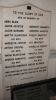 |
Roelof and Eva Swartout First Lord's Supper Memorial Plaque
Roelof and Eva Swartout First Lord's Supper Memorial Plaque 26 December 1660 , Dutch Reformed Church, Kingston, New York BRaynis added this on 9 Jun 2011 mfmssm74 originally submitted this to Dutch Cousins Family Tree on 20 Jun 2010 Photo Roelof and Eva were members of the Dutch Reformed Church in Kingston, NY. They were present at the… |
- [S394] Ancestry.com, Public Member Trees, (Name: Ancestry.com Operations, Inc.; Location: Provo, UT, USA; Date: 2006;), Database online., Skinner/Schinzel-Ahlemeyer/Haines Tree J_Ahlemeyer.
Record for Eva Albertse Bradt cf notes
History
http://www.donnneal.com/vanderpoel-dehooges-post-bradt.html
Johannes was the son of ANTHONY DE HOOGES, one of the leading officials of New Netherland, and EVA ALBERTSE23 {BRADT} DE HOOGES.24 Anthony was born in Noord, a section of Amsterdam, on December 14, 1620. He died in Fort Orange/Rensselaerswyck on or about October 11, 1655. We do not have an exact date of birth for Eva, but as she was baptized in the Lutheran Church in Amsterdam25 on January 9, 1633, it is likely that she was born very late in 1632 or early in the new year. She died, probably in Hurley, New York, as early as 1689 but no later than the first part of 1691 because her second husband, Roelofs Swartwout, married again in late 1691. Eva was probably buried in Hurley.
Anthony and Eva were married, quite probably in Rensselaerswyck, sometime in October of 1647, because there is a record of payment dated October 29, 1647, for services performed at their wedding.26 (The West India Company paid the expenses of the wedding.) It is worth observing that Eva seems to have been just 14 or 15 years of age when she was wed to a man twice her age. Following Anthony's premature death, Eva mortgaged the couple's house and lot in order to create a trust fund for the five children she and Antony had produced. Johannes de Hooges received his share of the proceeds shortly before his marriage to Margaret {Post} de Hooges in 1675.
ronsand31 added this on 5 Nov 2010
Brenda Leavy originally submitted this to Gordon/Leavy on 15 Feb 2009
____________________________________
More-
http://www.donnneal.com/vanderpoel-dehooges-post-bradt.html
Johannes de Hooges's mother Eva was the daughter of ALBERT ANDRIESSEN BRADT27 and his first wife, ANNETIE BARENTSE {VAN ROTMERS} BRADT. Both Albert and Annetie were born about 1607. Annetie died in 1661 - probably fairly early in the year, since the official records in February of that year contain a reference to her funeral pall. She evidently died in Fort Orange or Rensselaerswyck, but we have no information about where she is buried. Annetie's estate was settled on June 6, 1662. Albert died on June 7, 1686. Presumably he is buried in the Lutheran burying ground in Albany.28
This couple recorded their marriage intentions at the Oudekerk (Old Church) in Amsterdam29 on March 27, 1632, and were married there on April 11, 1632 (which was Easter in that year). The Oudekerk was a Reformed church, and it is not clear why the couple - both Lutherans - were married there. It may be that the Lutheran minister was unavailable. Perhaps the couple did not wish to go through a separate civil ceremony at city hall, which would have been the case had they married outside the official, Reformed, faith. Or it may simply be that the Lutheran church, then being constructed, was unsuitable for marriages at this time. We do know that the Bradts later had two children baptized in that Lutheran church and that Albert remained a practicing Lutheran himself (though his children did not), so evidently it was a logistical problem of some sort that caused them to be married in the Oudekerk.30
The Van Rotmers31 family apparently originated on the North Sea coast at the mouth of the Elbe River, just east of Cuxhaven in what is now the German state of Niedersachsen. They are associated with two towns that are called Altenbruch and Otterndorf in German and Oudebroek and Aterendorp in Dutch; we do not know in which of them Annetie was born. From her patronymic, we can tell that her father was named BARENT VAN ROTMERS. Her mother's name was GEESJE32 Barens, who is thought to have been born about 1591.
Annetie's father Barent seems to have died before 1632, as he is never mentioned in the surviving records. At that time her mother, Geesje, was living on Schaepensteegje (Sheep Alley), which is near Rembrandtplein in Amsterdam.33 During the fall of 1640, Geesje Van Rotmers immigrated to New Netherland aboard a ship called den Wagterhondt (The Waterhound). At some point - Bradt family researchers think before she immigrated - she married a gunner at Fort Orange named Pieter Jacobsz van Rynsburch.34 She is thought to have died before April of 1658 and definitely was deceased by 1663.
ronsand31 added this on 5 Nov 2010
Brenda Leavy originally submitted this to Gordon/Leavy on 15 Feb 2009
__________________________________
Passenger and Immigration Lists Index, 1500s-1900s about Eva Albertse Bratt
Name: Eva Albertse Bratt
Year: 1637
Place: New York, New York
Source Publication Code: 1736
Primary Immigrant: Bratt, Eva Albertse
Annotation: The Yearbook has details of the Society, and on pp. 42-66 is a section entitled "Ancestors and Descendants." This lists original settlers in New York and their progeny. Each original settler arrived between 1624 and 1664. The list changes slightly from ye
Source Bibliography: THE DUTCH SETTLERS SOCIETY OF ALBANY. Yearbook, vol. 45, 1974-1977. Albany, New York: the society, [1977], pp. 42-66.
Page: 43
__________________________
New York City Marriages, 1600s-1800s about Roeloff Swartwout
Name: Roeloff Swartwout
Marriage Date: 1660
Marriage Place: New York City, New York, New York
Self Comments: farmer
Other Comments: On microfilm at Family History Library, Salt Lake City, Utah.
Source: The New York Genealogical and Biographical Record (quarterly), 1884, selected extracts
Publisher: New York Genealogical and Biographical Society
Publication Place: New York, NY
Page: 40
Source Information: Genealogical Research Library, comp.. New York City Marriages, 1600s-1800s [database on-line]. Provo, UT, USA: Ancestry.com Operations Inc, 2005.
Original data: For specific source information see the publication information listed with each entry. Many of the source documents are available in the Genealogical Research Library collection. Many of the records may also be found on microfilm at the Family History Li.
Description: This database is an index to approximately 410,000 individuals who were married in or near New York City in the United States between 1622 and 1899. Information that may be found in this database for each individual includes their name, spouse's name, marriage date, location, and source information.
___________________________
KIP
3- Jacob Kip, born New Amsterdam, Aug. 25, 1666, died Kingston on Feb. 28, 1733. About 1695, he married Rachel Swartwout, daughter of Roelof and Eva (Bradt) Swartwout, born April 10, 1669, died about 1765. Eva Bradt was the daughter of Andries Bradt and his wife, the widow of Anthony deHooges. Their son:
4- Maria Kip, baptised Kingston, Feb. 18, 1709, married Jan Van Benthuysen, son of Barent and Jannetie (Van Wagenen) Van Benthuysen, batptised Kingston, Feb. 6, 1704.
____________________________
from Famous Families...
8- Adam DINGMAN (1645->1721), from Holland;
settled at Greenbush, near Albany, 1693;
m 1676 Aeltie Jacobse (Flodder) Gardiner (d ca 1720;
Jacob Janse Flodder, at Rensselaerwyck, 1638,
m 2d, Barentje Stratsmans);
7- Jacob [Dingman?] (1677-1745), of Kinderhook, NY;
m 1698 Eva Swartwout (d >1745; Roeloff, from Holland, 1657, schout of Esopus, 1660, m 1657, Eva Albertsen Bratt;
Thomas, m 1630, Adrientje Symonds);
6- Andrew (1711-1801), pioneer Dingmans Choice, PA;
m 1740, Cornelia Kermer (b 1720; Dirk [b 1697],
m Eva, dau. of Hendrick Schoonover,
m Cornelia Swartwout;
Isaac, m Kyntje Keyser;
Abraham, from Germany, m 1656, Melje Davis);
5- Andrew (1753-1839), Dingmans Choice; Am. Rev.;
m 1774, Jenneke Westbrook;
4- Daniel Westbrook (1775-1862), mem. PA Legislature, 1808-14; judge 28 yrs;
m 1795, Mary Westbrook;
3- Andrew (1803-89), m 1825, Caroline E. Sayre;
2- Mary (2 below)
___________________
 |
First Families of America
|
 |
First Families of America, cropped for DINGMAN
8- Adam DINGMAN (1645->1721), from Holland; settled at Greenbush, near Albany, 1693; m 1676 Aeltie Jacobse (Flodder) Gardiner (d ca 1720; Jacob Janse Flodder, at Rensselaerwyck, 1638, m 2d, Barentje Stratsmans); 7- Jacob [Dongman?] (1677-1745), of Kinderhook, NY; m 1698 Eva Swartwout (d >1745; Roeloff, from Holland, 1657, schout… |
 |
Jacob Kip marries Rachel Swartwout, son Maria Kip marries Jan van Benthuysen- Van Benthuysen genealogy
Jacob Kip marries Rachel Swartwout, son Maria Kip marries Jan van Benthuysen- Van Benthuysen genealogy: KIP- 3- Jacob Kip, born New Amsterdam, Aug. 25, 1666, died Kingston on Feb. 28, 1733. About 1695, he married Rachel Swartwout, daughter of Roelof and Eva (Bradt) Swartwout, born April 10, 1669, died about 1765. Eva Bradt was the daughter… |
- [S394] Ancestry.com, Public Member Trees, (Name: Ancestry.com Operations, Inc.; Location: Provo, UT, USA; Date: 2006;), Database online., Skinner/Schinzel-Ahlemeyer/Haines Tree J_Ahlemeyer.
Record for Roeloff Thomase Swartwout
From Records
https://netfiles.uiuc.edu/cgsnyder/www/PS02/PS02_415.HTML
Occupation: Sheriff Of Ulster
Father: Thomas (Tomys) SWARTHOUT (ca1607-)
Mother: Hendrickjen Barentse OTSEN (1610-)
Misc. Notes: Came to America with parents in March 1652
Was appointed first Sheriff of Wiltwyck (Kingston)
Will dated 30 March 1714
pg 178: Listed on the passenger list of De Bonte Koe (The Spotted Cow), Captain Pieter Lucasz, April 15, 1160: Roeloff Swartwout, farmer. [On his return to New Netherland, where he had previously resided.]114
In Indian fight June 7, 1663; member of General Leisler's Council of War with France.
Roeloff Swartout, son of Tomys and Hendrickjen Otsen Swartwout, was born in Amsterdam , Holland and baptized there 6/1/1634. He came to America with his parents in March 1652. In 1656, Roeloff paid a visit to Beverswijch, by which name the present city of Albany was legally known until 1664. On account of the crescent form of the bank of the river at this point this hamlet was called the Fuyck or Beversfuych, and it was Fuyck by the Dutch for many years after it had passed into the hands of the British. Here it is related, he met Eva Albertse Bratt, widow of Antoine de Hooges and mother of several children and on finding himself enamored with the attractive widow, he married her. His father, Tomys, attended the wedding on August 13, 1657.
Having decided to become a resident of Esopus, near Kingston, Roeloff made a voyage to Holland to buy Agricultural instruments. He sold and mortgaged about all he owned to raise the necessary money. He returned from Holland on De Bonte Koe (The Spotted Cow), Captain Pieter Lucasz. With him he brought in his employ, Cornelius Jacobez Van Leenwen; Arent Mertensz and Ariaen Huijbertsz from Guilderland. While in Holland, he made efforts to obtain a local Court of Justice and pastor for Esopus. While in Amsterdam he asked the lords of the West India Company to appoint him sheriff (Schout) of the settlement. He received the appointment and when he returned to America, the Director General was very angry over the appointment because he had not been consulted and wrote to Holland objecting. He received a letter back from the lords of the West India Company giving him a severe reprimand for his criticism of the appointment. This appointment completed the organization of the first Court of Justice in the County of Ulster.
Elsewhere in Swartwout Chronicles, we are told that Roeloff was an "enterprising and respectable young man." He must also have had some temper for in 1663 he was suspended from office for writing "an insulting letter" but he must also have had strength to ackowledge a fault for he apologized to his superiors.
Roeloff Swartwout, Warnaer Hoornbeeck and Eva Alberts witnessed/sponsored the 27 Apr 1679 baptism of Claertie de Hoges, daughter of Johannes de Hoges and Margriet Post in Kingston, Ulster Co, NY.
From 1689-90 he held the position of Justice of the peace and Collector of Grand Excise of Ulster County.
His second objective in visiting Holland had been to obtain a settled pastor for Esopus, and it was apparently accomplished for we are told "On March 4, 1661, Thomas Chambers, Cornelius Barentsen Slecht, Gertruy Andries, Roeloff Swartwout, Alaerdt Heymensen Rose and Juriaen Westvael agreed in writing to give Blom (the Dutch pastor) as salary for the first year, to commence 9/5/1660, the sum of 700 guilders in corn, at beaver valuation in case his farm should fail, we promise further to put the farm in good order according to contract as soon as the land has been allotted and raise that sum at the latest for the coming farming season.
Having rented a bouwerij (farm), embracing 43 morgens (or about 86 acres) belonging to Jacob Janse Stoi's widow, whose husband had been killed by the Indians at Esopus in October, 1659, Roeloff Swartwout occupied it shortly after his return from Holland.
The first Lord's Supper was held 12/28/1660 at which both Roeloff and wife, Eva, were among the 17 participating.
The town of Hurley, Ulster Co., which was to be the home of Roeloff Swartwout for the remainder of his life is described in "History of Ulster Co., NY" as lying on the west of the territory and as being bounded on the north by Woodstock, on the east by Kingston, on the south by Rosendale and marbletown and on the west by Marbletown and Olive. The settlement of the town dates back to about 1662 when several patents were granted upon the territory of Nicuro Corp. Fifty years later, we find the name of Barnardus Swartwout among the members of the corporation. In 1674, we find a complaint was filed against Roeloff Swartwout by a magistrate, Louis DuBois, charging him with settling in the Flat Land contrary to Governor's orders.
What follows was copied from O'Callahan's "Documentary History of New York": "Captain Milborn - Friends and Brothers - After cordial salutation, yours of 5 April is shown to me. I have got as much maize as I could find which I send up to your Honor with Theunis Pieterson's Yacht. I am busy getting as much money from the Kinn's revenue as will satisfy the people from whom I had the corn. The number will appearby the list in the letter. touching the election of two delegates from our country, it shall be done on the 15th inst. I was put off until your Honor's arrival here. I feared a contest about it, I admit. It ought to be a free election for all classes, but I would be loath to allow those to vote or to be voted for who have refused to this day to take their oath, lest so much leaven might taint that which is sweet of our hed men, from Pieter d'laney. There is yet no further news from sea. I expect quick progress and good success against the French, our enemies both by water and by land. I shall expect to see your Honor's arrival here in the yacht coming soon. Finally I commend your Honor to God's protection and remain, your Honor's servant to command... signed Roeloff Swartwout.
The life of Roeloff and wife seems to have been an ideal one for those times. They were evidently prosperous, public spirited, and religious, while living through all the vicissitudes of life in the new world. About the year 1689, Eva died. Two years later, Roeloff married, in the city of New York, Francijntje Andries, widow of Abraham Lubbertszen. Surviving his second wife, he died in Hurley in May 1715.
From "The Early History of Kingston and Ulster Co., NY" published by the Ulster County Historical Society, Marbletown, Kingston, NY, 1975: "Circumstances surrounding appointment of roeloff Swartwout as the first schout (sheriff) of Wiltwyck (Kingston) are of interest. On 15 apr 1660, the directors in Holland informed Stuyvesant that "One Roeloff Swartwout, who now comes over with some other men and farmers, to settle at the Esopus and engage in agriculture, has petitioned us here for the office of sheriff at the place, and although it is premature in our opinion, we have granted the aforesaid request to encourage the man and promote justice." Swartwout was the son of Tomas [sic] Swartwout of Fort Orange (Albany). Roleoff had left Fort Orange, made a trip to the Netherlands and was now about to return to Niew Netherlands and settle at Esopus. It is presumed that Swartwout may have secured the office through influence of his wife's connections. She was the widow of Anthony de Hooges who had served as secretary of the colony of Rensselaerwyck.
What follows is from the "New York Historical Manuscripts-Dutch Kingston Papers," Vols. I and II (1661-1667): On January 3, 1671/2, Roeloff Swardwoudt informs the honorable court that he, Warnaer Hoorenbeecz, Johannes de Hoogens and Daniel Pruine, while returning from marbletown, between Hurley and Marbletown, found a fire on a wood path and near it 4 savages busy cooking something and judging from their language they were southern savages which they themselves acknowledged. They asked Swardwoudt and the whole company whence they came and Johannes De Hoogens answered, "froz Waeewaersink" and the aforesaid savages said they also intended to go to Waewaersink and after much talk they said to the savages, "Go with us to the Dutch houses," whereupon the savages said, "We shall follow you." And for the purpose of making the savages follow them, they took one of their rifles. And they, seeing that the savages did not follow them, returned right away to the spot and found the savages gone. They could see by the burning of the fire that the savages had departed shortly after them and maintain that the savages are planning mischief and therefore informed the honorable court. Captain Chambers proposes the necessity of keeping watch. The honorable court orders a watch of 4 men until further orders because the messenger remains away beyond the time. Capt. Chambers proposes the necessity of having the village closed as per the decree.121
SWARTWOUT, Roeloff, a resident and freeholder of Beverwyck, until 1660, when he was appointed first sheriff of wiltwyck, at the Esopus; 1663, suspended from office on account of an insolent letter, on making an apology restored; 1689-90 appointed justice and collector of the grand excise of Ulster county. He married Eva Albertse, daughter of Albert Andriese Bratt, and widow of Antony de Hooges, of Beverwyck.116, pg 170Marriage13 Aug 1657, Beverswyck (Albany), New Netherlands
jagz2116 added this on 1 Jun 2010
Brenda Leavy originally submitted this to Gordon/Leavy on 5 Jan 2009
______________________________
History
http://www.donnneal.com/vanderpoel-dehooges-post-bradt.html
About two years later, on August 13, 1657, de Hooges's widow Eva entered into a marriage contract with a man named Roelofs Swartwout, who had arrived in New Netherlands in 1652 and had come to Fort Orange/Rensselaerswyck a few years later. Well-educated and ambitious, Swartwout had dabbled in various projects there before marrying the widow of de Hooges, a woman who was at least several years older than himself. This marriage brought him social standing and connections, but also the debts that de Hooges had left behind with his premature death. For his own part, Swartwout was all too willing to take on more debt, which often left him heavily mortgaged, chronically overextended, and even in hardship - especially with the large family he and Eva produced.
A year or two after their marriage, the couple relocated to "the Esopus," as the Dutch community along Esopus Creek south of Fort Orange/Rensselaerswyck was called.61 This area was a new frontier for the Dutch, who had only recently established a town on the abutment overlooking the newly opened farmlands extending to the west. This town, first called Wiltwyck (Wild Woods), was later renamed Kingston. The rich and easily cultivated land in the vicinity of Wiltwyck appealed to the Dutch, including Stuyvesant, as a potential source of provisions for the town at the mouth of the Hudson. Swartwout and his new wife seem to have maintained homes in both Beverwyck and the Esopus for awhile. The former was presumably the de Hooges house that would have become Eva's by inheritance, although just before her marriage Eva may have been living nearby at the corner of Beaver Street and Broadway.62
The house in Beverwyck was chiefly used for business purposes or rented out and was later sold off with other property Anthony had owned when Swartwout needed money. In any case, the younger de Hooges children, including Johannes (about 3 to 7 years of age when his mother married Swartwout), lived primarily at the Esopus after about 1659 and then raised their own families there. Eva and her second husband are listed among the celebrants at the first communion at the new church at Wiltwyck on December 26, 1660. Swartwout bought a village lot in Wiltwyck in 1662, then a lot outside the palisade that the town erected for protection on its nicely elevated but isolated site.63
Swartwout had become the local schout (similar to sheriff in the English system) through interesting circumstances. He went to Amsterdam in 1660 and personally persuaded the West India Company to appoint him, but Peter Stuyvesant objected on the grounds that Swartwout was immature and inexperienced. Swartwout used his influence, though, and the Company overruled Stuyvesant in 1661. (A schout, similar to the English sheriff, maintained order, prosecuted certain crimes, and with several elected representatives helped to set policy.) His career as schout had its ups and downs, as he lost his office for a time and struggled economically, but later he regained some of his authority. Fortunately, no one in the Swartwout family was killed, wounded, or taken prisoner during the second Indian raids on the settlements along Esopus Creek and at Nieuw Dorp (later called Hurley) on June 7, 1663. This time, Swartwout played a role in organizing the defense. 64
Six years later, in 1669, Swartwout and his family moved a few miles west to Nieuw Dorp, where they lived in the village itself and owned two lots outside of it. The Swartwout's continued to work their fertile farmland (eventually about 40 acres) on the north side of Esopus Creek, probably producing hops, rice, and grains like the other Dutch farmers in the area.65 In addition, Swartwout himself maintained his involvement in local politics. By now Johannes de Hooges might well have been living on his own, but he was not married until 1675 - to a woman, Margaret {Post} de Hooges - who was born in Nieuw Dorp. 66
Swartwout played a small role in a big event in New York's early history, and Johannes de Hooges may have had a cameo role in the same event. Roelofs Swartwout was an enthusiastic adherent of Jacob Leisler, a militia captain who led what is sometimes termed a "rebellion" during the late 1680s. Civil government in New York unraveled in 1688 in the wake of the Glorious Revolution in England, when William and Mary became the new monarchs and colonial administration was far from people's minds. With a vacuum in the colony's leadership, Leisler stepped forward to maintain order or usurp the crown's power, depending on one's perspective. Leisler primarily attracted support from those who were not members of the commercial, political, and social establishment, and he was also strongly anti-Catholic.
After about two years with Leisler in command, a new governor arrived and restored royal authority. Leisler and a lieutenant were executed for treason, and Leisler's supporters came under suspicion. Because Swartwout had been elected to the General Assembly as a Leisler supporter, he too was arrested and sentenced to death, but his sentence was not carried out and he was pardoned in 1699. Johannes de Hooges was commissioned a captain by Leisler on December 26, 1689, and it is logical to think that he too was a Leisler supporter - all the more in view of Johannes's close relationship and business partnerships with his rather ambitious stepfather. There is no record of Johannes's being accused or arrested, however.67
jagz2116 added this on 1 Jun 2010
Brenda Leavy originally submitted this to Gordon/Leavy on 15 Feb 2009
_____________________________
U.S. and International Marriage Records, 1560-1900 about Eva Albertsen Bradt
Name: Eva Albertsen Bradt
Gender: Female
Birth Year: 1630
Spouse Name: Anthony De Hooges
Spouse Birth Place: Ho
Spouse Birth Year: 1620
Marriage Year: 1643
Marriage State: NY
Number Pages: 1
Source Citation: Source number: 226.000; Source type: Electronic Database; Number of Pages: 1; Submitter Code: JST.
Source Information: Yates Publishing. U.S. and International Marriage Records, 1560-1900 [database on-line]. Provo, UT, USA: Ancestry.com Operations Inc, 2004.
Original data: This unique collection of records was extracted from a variety of sources including family group sheets and electronic databases. Originally, the information was derived from an array of materials including pedigree charts, family history articles, querie.
Description: This database contains marriage record information for approximately 1,400,000 individuals from across all 50 United States and 32 different countries around the world between 1560 and 1900. These records, which include information on over 500 years of marriages, were extracted from family group sheets, electronic databases, biographies, wills, and other sources
________________________________
U.S. and International Marriage Records, 1560-1900 about Eva Albertsen Bradt
Name: Eva Albertsen Bradt
Gender: Female
Spouse Name: Anthony De De Hooges
Spouse Birth Place: Ho
Spouse Birth Year: 1620
Marriage Year: 1647
Marriage State: NY
Number Pages: 1
Source Citation: Source number: 671.000; Source type: Electronic Database; Number of Pages: 1; Submitter Code: HAM.
Source Information: Yates Publishing. U.S. and International Marriage Records, 1560-1900 [database on-line]. Provo, UT, USA: Ancestry.com Operations Inc, 2004.
Original data: This unique collection of records was extracted from a variety of sources including family group sheets and electronic databases. Originally, the information was derived from an array of materials including pedigree charts, family history articles, querie.
Description: This database contains marriage record information for approximately 1,400,000 individuals from across all 50 United States and 32 different countries around the world between 1560 and 1900. These records, which include information on over 500 years of marriages, were extracted from family group sheets, electronic databases, biographies, wills, and other sources
_______________________________
U.S. and International Marriage Records, 1560-1900 about Roeloff Swartwout
Name: Roeloff Swartwout
Gender: Male
Birth Place: Ho
Birth Year: 1634
Spouse Name: Eva Bradt De Hooges
Marriage Year: 1657
Marriage State: NY
Number Pages: 1
Source Citation: Source number: 35.000; Source type: Electronic Database; Number of Pages: 1; Submitter Code: BRO.
Source Information: Yates Publishing. U.S. and International Marriage Records, 1560-1900 [database on-line]. Provo, UT, USA: Ancestry.com Operations Inc, 2004.
Original data: This unique collection of records was extracted from a variety of sources including family group sheets and electronic databases. Originally, the information was derived from an array of materials including pedigree charts, family history articles, querie.
Description: This database contains marriage record information for approximately 1,400,000 individuals from across all 50 United States and 32 different countries around the world between 1560 and 1900. These records, which include information on over 500 years of marriages, were extracted from family group sheets, electronic databases, biographies, wills, and other sources.
_______________________________
Passenger and Immigration Lists Index, 1500s-1900s about Roeloff Swartwout
Name: Roeloff Swartwout
Year: 1657
Place: New York, New York
Source Publication Code: 1736
Primary Immigrant: Swartwout, Roeloff
Annotation: The Yearbook has details of the Society, and on pp. 42-66 is a section entitled "Ancestors and Descendants." This lists original settlers in New York and their progeny. Each original settler arrived between 1624 and 1664. The list changes slightly from ye
Source Bibliography: THE DUTCH SETTLERS SOCIETY OF ALBANY. Yearbook, vol. 45, 1974-1977. Albany, New York: the society, [1977], pp. 42-66.
Page: 55
Source Citation: Place: New York, New York; Year: 1657; Page Number: 55.
Source Information: Gale Research. Passenger and Immigration Lists Index, 1500s-1900s [database on-line]. Provo, UT, USA: Ancestry.com Operations, Inc, 2010.
Original data: Filby, P. William, ed. Passenger and Immigration Lists Index, 1500s-1900s. Farmington Hills, MI, USA: Gale Research, 2010.
Description: Updated annually, this database is an index to passengers who arrived in United States and Canadian ports from the 1500s through the 1900s. It contains listings of approximately 4,838,000 individuals and references thousands of different records compiled from everything from original passenger lists to personal diaries. For each individual listed, you may find the following information: name, age, year and place of arrival, and the source of the record.
_______________________________
Passenger and Immigration Lists Index, 1500s-1900s about Roeloff Swartwout
Name: Roeloff Swartwout
Year: 1660
Place: New Netherland
Source Publication Code: 714
Primary Immigrant: Swartwout, Roeloff
Annotation: Contains passenger listings mentioned in Lancour, A Bibliography of Ship Passenger Lists, 1538-1825 (1963), nos. 72-76, 78B, 79, 81-83, 83 note, 85, 87A, 88, 89, 98(1), 100, 102(1A), 104-106, 107A, 110-111, 111 corr., 112-114. Includes index to ship names, place names, and about 10,000 personal names, with variant surname spellings. Tepper, in nos. 9120, 9135, 9143, 9144, and 9151, has similar lists.
Source Bibliography: BOYER, CARL, 3RD, editor Ship Passenger Lists, New York and New Jersey (1600-1825). Newhall, CA: the editor, 1978. 333p. 4th pr. 1986. Reprint. Family Line Publications, Westminster, MD, 1992.
Page: 123
Source Citation: Place: New Netherland; Year: 1660; Page Number: 123.
Source Information: Gale Research. Passenger and Immigration Lists Index, 1500s-1900s [database on-line]. Provo, UT, USA: Ancestry.com Operations, Inc, 2010.
Original data: Filby, P. William, ed. Passenger and Immigration Lists Index, 1500s-1900s. Farmington Hills, MI, USA: Gale Research, 2010.
Description: Updated annually, this database is an index to passengers who arrived in United States and Canadian ports from the 1500s through the 1900s. It contains listings of approximately 4,838,000 individuals and references thousands of different records compiled from everything from original passenger lists to personal diaries. For each individual listed, you may find the following information: name, age, year and place of arrival, and the source of the record.
- [S394] Ancestry.com, Public Member Trees, (Name: Ancestry.com Operations, Inc.; Location: Provo, UT, USA; Date: 2006;), Database online., Skinner/Schinzel-Ahlemeyer/Haines Tree J_Ahlemeyer.
Record for Albert Andriessen Bradt cf 'notes' for interesting background
Life story (Anriessen BRADT)
Inasmuch as there were eight children born to Andriessen and his wife, Storm being the third, two of their children, Barent and Eva, were likely with their parents on this voyage. Five of their children were born in the new world: Engeltje, Gisseltje, Andries, Jan and Dirck
Andriessen and his partners were to operate a mill. But not long after his arrival he took the liberty of dissolving partnership and established himself as a tobacco planter. Van Renssselaer had sent greetings to him in a letter dated September 21, 1637, (addressed to the partner of Andriessen, Pieter Cornelisz, master millwright) but in a subsequent letter, of May 8, 1638, to Cornelisz he wrote: "Albert Andriessen separated from you, I hear that he is a strange character, and it is therefore no wonder that he could not get along with you."6 Nevertheless, Van Rensselaer entertained the hope that Albert Andriessen would succeed as a tobacco planter. On December 29, 1637, he wrote to Director William Kieft that he should assign some of the young men on board the "Calmar Sleutel", commanded by Pieter Minuit and sailing in the same month, to tobacco planting with Aiidriessen "if he has good success," otherwise they were to serve with the farmers.
These young men were inexperienced, it seems. One, Elbert Elbertz, from Nieukerck, eighteen years old, was a weaver; Claes Jansen, from the same place, seventeen years old, was a tailor; Gerrit Hendricksz, also from the same place, fifteen year old, was a shoemaker. Gerrit must have served Andriessen for a term of at least three years; for his first three years' wages, from April 2, 1638 to April 2, 1641, are charged to Andriessen.
In a letter of May 10, 1638, Van Rensselaer advised Andriessen that he had duly received his letter stating that the tobacco looked fine. But he was desirous to get full particulars as to how the crop had turned out, and to get a sample of the tobacco. He expressed dissatisfaction at Andriessen having separated from Pieter Cornelisz, and liked to know the cause of his dispute with the officer and commis Jacob Albertsz Planck and his son. He informed Andriessen that he was obliged to uphold his officers. and promised him to stand by him and cause him to be "provided with everything." But he would not suffer bad behavior. He also informed him that it was apparent from the news he had received from several people that he was "very unmerciful to his children and very cruel" to his wife; he was to avoid this "and in all things have the fear of the Lord" before his eyes and not follow so much his own inclinations. But there was also another matter for which Van Rensselaer censured him: he had traded beaver furs with Dirck Corszen Stam contrary to contract, defrauded and cheated him. For seven pieces of duffel he had given him only the value of twenty-five merchantable beavers.
Van Rensselaer also addressed a letter, of the same date, to Jacob Albertsz Planck informing him that he had written to Andriessen that he should have more respect for the officers. Planck was instructed to notify Andriessen and all others living in the colony not to engage in "such detrimental fur trade," for he did not care to suffer in his colony those who had their eyes mainly on the fur trade.'
Notwithstanding, it was Dirck Corszen that was an unfaithful supercargo. And Van Rensselaer requested, in a letter of May 13, 1639, of Andriessen, that he should write him the truth of the matter and pay him what he still owed Corszen. If he saw that Andriessen acted honestly herein, he would do all in his power to help him. Andriessen should go to the superintendent of the colony, Arent van Curler, and purchase necessaries for himself and his own people at an advance in price of 50 per cent. He should get merchandise for the Indian trade at an advance of 75 per cent. In return he was to furnish Van Curler with skins at such a price that he could make something on the transaction.
Van Rensselaer also informed Andriessen that he would try to sell his tobacco at the highest price and furthermore give him 25 per cent more than his half of the net proceeds would amount to. He would moreover grant him 25 per cent discount on the grain which he bought. In fact, Van Rensselaer's confidence in Andriessen seemed to be increasing. For he not only acknowledged that he had received several letters from him, but also wished to say to his credit that he had received returns from no one. but him. He complained, however, of the tobacco which had been sent to him in barrels. It was a great loss to both that the "tobacco was so poor and thin of leaf that it could not stand being rolled." This. he thought, was likely due to Andriessen having left too many leaves on the plants. But not this alone: the weight was short. One barrel, put down at 292 lbs., weighed but 220 lbs. This was perhaps due to deception on the part of a certain Herman, a furrier. But anything like this should be avoided in the future. The tobacco amounted to 1,156 pounds net, which was sold for 8 st. (16 cents) a pound. Had it not been so bad and wretched, it could have been sold for twenty cents a pound. A higher price could be obtained if Andriessen would be more careful in the future and leave fewer leaves on the plants. He should try to grow "good stuff", for the tobacco from St. Christopher, an island in the West Indies, was so plentiful in Netherland that it brought but 3 stivers a pound. Andriessen should also each year make out a complete account of all expenses and receipts from tobacco, so Van Rensselaer could see whether any progress was made.
But Andriessen was a poor accountant. Neither Van Rensselaer nor his nephew, the former Director Van Twiller, could understand his accounts.1' Van Rensselaer therefore gave him directions to follow in making his entries and statements, claimingthat any other procedure would "leave everything confused and mixed up." He complained that Andriessen laid certain transactions before the patroon, which should be laid before the cornmis. He expressed the sentiment that Andriessen was making him his servant when he wrote to him "about soap and other things." He also complained that Andriessen caused great loss by making him hold the tobacco too high: it was safest to follow the market price in Netherland. Finally he censured him for buying unwisely - he had paid f. 200 for a heifer, "which is much too high." is The patroon and Andriessen had several disagreements.
The latter, with his brother Arent Andriessen, sent to the patroon sometime in 1642, 4,484 lbs. of tobacco. It was sold on an average of eight and one half st. a lb. Deducting 270 lbs. for stems, the net weight brought a sum of f. 1790:19. But the duty, freight charges, and convoy charges amounted to f. 629:15. The patroon said he would deduct only half of this if Andriessen compensated him according to his ordinance for his land on which the tobacco grew. But as long as he was in dispute with him he would deduct the whole sum. Andriessen did not suffer. Van Rensselaer complained in letter of March 16, 1643, to Arent van Curler that he did not know what privilege Albert Andriessen had received, since "his cows are not mentioned in the inventory sent him." He stated he would not want any one, no matter who he was, to own any animals which were not subject to the right of pre-emption. Therefore, Curler should include Andriessen's animals in the inventory, or make him leave the colony and pay for pasturing and hay during the past year
In September 5, 1643, the patroon stipulated the following with respect to Andriessen, whose term had long before expired without his having obtained a new lease or contract.
He "shall . . . be continued for the present but shall not own live stock otherwise than according to the general rule of one half of the increase belonging to the patroon and of the right of preemption and, in case he does not accept this, his cattle shall immediately be sent back to the place whence they came, with the understanding, however, that half of the increase bred in the colony shall go to the patroon in consideration of the pasturage and hay which they have used; and as to his accounts he shall also be obliged to close, liquidate and settle the same; and as far as the conditions after the expiration of his lease are concerned, the patroon adopts for him as well as for all others this fixed rule, of which they must all be notified and if they do not wish to continue under it must immediately leave the colony, namely, that every freeman who has a house and garden of his own shall pay an annual rent of 5 stivers per Rhineland rod and for land used in raising tobacco, wheat or other fruits 20 guilders per Rhineland morgen, newly cleared land to be free for a number of years, more or less, according to the amount of labor required in such clearing.
Andriessen not only cultivated tobacco. He operated "two large sawmills," run by a "powerful waterfall," worth as much as f. 1000 annual rent, but the patroon let him have them for f. 250 annual rent. 17 From May 4, 1652, to May 4, 1672, Andriessen is charged with the annual rent for these two mills and the land on Norman's Kill. 18 Originally this Kill was called Tawasentha, meaning a place of the many dead. The Dutch appelative of Norman's Kill is derived from Andriessen.
In New Amsterdam he had acquired a house and lot from Hendrick Kip, August 29, 1651. It lay northeast of fort Amsterdam." Under date of October 5, 1655, we find that he was taxed fi. 20 for this house and lot.
In May, 1655, before the court of the Burgomasters and Schepens in New Amsterdam, Roeloff Jansen, a butcher, appeared and made a complaint against Christiaen Barentsen, attorney for Andriessen. Jansen had leased a house and some land belonging to Andriessen who was to give him some cows. But the house was not tight" and "not enclosed," and the cows were missing. might still suffer. The defendant, as attorney for Andriessen, replied that it was not his fault that the demand had not been complied with according to the contract. He requested time to. write to his principal about it. The Court granted him a month's time in which to do this. In due time, however, the court ruled that Andriessen should make the necessary repairs.
Some years later, Simon Clasen Turck started a suit against Andriessen, of which we shall let the court minutes of New Amsterdam speak:
[August 19, 16591. "Simon Turck, pltf., vs. Dirck van Schelluyne as att'y of Albert Andriessen, deft. Deft, in default. Symon Turck produces in Court in writing his demand against Albert Andriessen concluding, that the attachment on the two cows grazing with Wolfert Webber shall stand good and have its full effect, until the said Albert Andriessen shall have paid him his arrears to the amount of fi. 2, sent to him by Joris Jans Rapalje Ao. 1649, the 3d Septr. in the absence of Pieter Cornelissen, millwright, decd., not accounted for nor made good by him." The attachment on the cows is declared valid by the Court.22
[August 19]. "Dirck van Schelluyne in quality as att'y for Albert Andriessen Noorman, answers demand of Symon Clasen Turck. The court orders copy to be furnished to party to answer thereunto at the next Court day."23
[September 2]. "Symon Clasen Turck replies to answer of Dirck van Schelluyne, att'y of Albert Andriessen. Court orders copy to be furnished to party to rejoin at the next court day,"24
[September 23]. "Tielman van Vleeck as att'y for Turck requests by petition, that Sybout Clazen shall be ordered to deliver by the next Court day his papers used against the abovenamed Symon Turck; also that Dirck van Schelluyne, att'y of Albert Andriessen, shall be ordered to rejoin to Symon Turck's reply.
Apostille : Petitioner's request is granted, and parties shall be ordered to prosecute their suit by the next court day.
"On date 17th January 1660, has Dirck van Schelluyne furnished me Secretary Joannes Nevius, his rejoinder, and demand in reconvention, as attorney of Albert Andriessen against Tielman van Vleec, att'y of Symon Clazen Turck, also rejoinder of Abra ham Verplanck against ditto Van Vleeck as substitute of Anthony Clasen More: Whereupon the President of the Burgomasters and Schepens ordered: Copy hereof to be furnished to party, and parties are ordered to exchange their papers with each other and to produce their deductions and principal intendit by inventory on the next Court day."
On January 22, 1660, the Burgomasters and Schepens dismissed the "pltfs. suit instituted herein" and condemned him to pay the costs incurred in this suit.
But a few days later, on January 28, 1660, it rendered the following decision: "Burgomasters and Schepens of the City of Amsterdam in N: Netherland having considered, read and reread the vouchers, documents and papers used on both sides in the suit between Tielman van Vleeck attorney of Simon Clasen Turck, (as husband and guardian of Merretje Pieters, daughter of the dec[eas]d Pieter Cornelissen, millwright, and his lawful heir, as well for himself as representing herein the orphan child of Tryntie Pieters, deceased daughter of said Pieter Cornelissen) pltf. against Dirck Van Schelluyne, attorney of Albert Andriessen Noorman, residing at Fort Orange, deft. relative to and concerning two hundred guilders, which Symon Clasen Turck is demanding from Albert Andriesen for so much, that Albert Andriesen has received from Jorsey in the absence of Pieter Comelissen, millwright, dated 3rd September, 1649, gone to Virginia and not computed by him nor made good as appears by contract made between Albert Andriessen and Symon Clasen Turck by the intermediation of - Corlear and Dirck van Schelluyne according to acte thereof executed before D: V. Hamel, Secretary of the Colony of Reinselaars Wyck, dated 27th September, 1658; and whereas the words of the contract read as follows :-
' Firstly, Symon Turck shall collect, receive, retain and dispose of as his own according to his pleasure, all outstanding debts receivable, wherever they be; all effects and goods found in the house of the deceased Pieter Cornelissen, whether belonging to him individually or to his Company or Association; On the other hand, Albert Andriesen assumes himself all the debts payable where and to whomsoever they may be, relating to their partnership, whether these stand in the name of Pieter Cornelissen or his own name. promises to release Symon Turck from all claims relating hereunto.' - having looked into, examined and weighed everything material, Burgomasters and Schepens find it right, that the pltf's demand be dismissed, inasmuch as they find, that the two hundred guilders were not to be received, but were paid several years since to Joris Rapalj e, who sent the same to Albert Andriesen Noorman and are accordingly not payable to the estate of Pieter Cornelissen, but whenever Symon Turck or his attorney can prove that, at the time of the settlement of accounts and writing of the contract, Albert Andriesen Noorman notified Symon Turck, that he should receive the 11. 200., hereinbefore in question, from Sybout Clasen, then Albert Andriesen shall give and pay the above mentioned fi. 200., with costs, and in default of proof the pltf. is condemned in the costs of the suit. Regarding the demand in reconvention about certain planks, no disposition can be made therein as the same is moved according to the Lites Contest atio. Thus done and adjudged by the Burgomaster and Schepens of the City of Amsterdam in New Netherland as above.
" Adj. as above
" Martin Kregier."
The court minutes under date of June 8, 1660, regarding this litigation, state:
" On petition of Tielman Van Vleeck, attorney for Symon Clasen Turck, wherein he requests that the Court may not only examine, but also expedite the solution given by him relative to the fulfillment of the interlocutory judgment pronounced 28th January last, it is ordered :-Copy of the solution shall be furnished to party to answer thereunto at the next Court day.
And under date of January 29, 1661, the minutes pertaining to this case read: "On the petition of Tielman van Vleeck, agent of Symon Clasen Turck, wherein he requests, as Albert Andriesen Noorman remains in default, to answer the solution given in to Court on the 8th of June 1660, that the above named Albert Andries(e)n shall in contumacy be condemned to pay him petitioner the computed two hundred guilders remaining due to him; Whereupon was ordered: The petitioner shall notify his party hereof according to law before June 5, 1662.
" Appeared before me Robert Livingston, secretary etc., and in presence of the honorable Messieurs Philip Schuyler and Dirck Wessells, commisaries etc., Albert Andriese Bratt, who acknowledged that he is well and truly indebted and in arrears to Mr. Nicolaus Van Renselaer, director of colony of Renselaerswyck, in the sum of 3,956 guilders, as appears by the books of the colony of Renselaerswyck, growing out of the part rent for the mill and land; which aforesaid 3,956 guilders the mortgagor, to the aforenamed Mr. Director or to his successors, promise to pay, provided that whatever he, the mortgagor shall make appear to have been paid thereon shall be deducted: pledging therefor, specially, the produce of his orchard, standing behind the house which the mortgagor now possesses, from which produce of the orchard he promises to pay in rent during life twenty guilders in patroon's money in apples, and generally pledging his person and estate, personal and real, present and future, nothing excepted; submitting the same to the force of all laws and judges to promote the payment thereof in due time, if need be, without loss or cost.
"Done in Albany, without craft or guile, on the 30th of October, 1677.
"Aalbert Andriess Brat.
"Philip Schuyler.
"Dirck Wessels.
"Acknowledged before me,
"Robt. Livingstone, Secr.
Albert Andriessen died June 7, 1686
anne gutierrez added this on 11 Sep 2010
mezzojess originally submitted this to Jessica Family Tree on 25 Sep 2007Source: Olive Tree Genealogy
 |
Bradt's Sawmill on Normanskill Creek
Bradt's Sawmill on Normanskill Creek anne gutierrez added this on 11 Sep 2010 aten0000 originally submitted this to Ward Family Tree on 3 Jul 2010 |
- [S298] private communication: pvella, (Name: Patty Vella; Location: 1505 Methyl ST, Pittsburgh, PA 15216; Date: 14 May 2001;), Dingman Mattison, MayBell consolidated to (731) From Patty Vella, 14.May 2001, from MayBell Dingman Mattison to be read at a family reunion (1) fact ..... (28) .....
From Patty Vella, 14.May 2001, from MayBell Dingman Mattison to be read at a family reunion- year unknown (MayBell died in 1947)-
20180620 HAv 301 facts, replace other reference 135 facts= 399 ....
20190108HAv ... (406) facts
20190307HAv 355 facts, replaced ..... (541)
20190307HAv- (28) facts ..................... (569) ..... consolidated ~100 references... (731) compacted afterward, 0.24% ... (722)
20190307HAv- (1) fact, pasted from front Citation Text:
20190307HAv- (1) fact, pasted from front Citation Text:
From Patty Vella, 14.May 2001, from MayBell Dingman Mattison to be read at a family reunion- year unknown (MayBell died in 1947)-
Turn your thoughts to 1840, when our other grandfather and grandmother and family (Isaac and Amy Ellsworth Brock), came to Hebron. Can you young people visualize the trip? A yoke of oxen, and six weeks on the road from Grafton, NY to Hebron, Potter Co, PA-- a day's trip, or a little more, with your automobile. Imagine them reaching here and choosing a spot, cutting down trees, and clearing a space large enough, at first, to build a log cabin. Then the real struggle began, to keep the wolf from the door in more than one sense of the word. I've listened to my mother tell how, as a child, she had sat on the door-step and listened to the howling of the wolves close by. The future can never bring anything to us that we should be more proud of than our brave old ancestors, "heroes and heroines."
Mother dear (Mary Angeline Brock Dingman) was only six monhs old when she made that trip. But I fancy she was as happy as any of the weary travelers. Often it was hard to find a place to stop overnight. Grandma said once, they stopped at an inn, but everything was so mysterious and queer, they were afraid to stay after resting the stock. (I think they brought a cow and a calf.) Then they started on the road again. How worn and weary they must have been before they reached Potter Co! ___________________
|


 1622 - 1689 (67 years)
 [5]
[5] 


