| Sources |
- [S1115] Ancestry.com, U.S., Find A Grave Index, 1600s-Current, (Name: Ancestry.com Operations, Inc.; Location: Provo, UT, USA; Date: 2012;).
Record for James A. Garfield (53) facts
20251108GHLn-
20251108GHLn-
James A. Garfield
Photo added by Bobb Edwards
James A. Garfield VVeteran Famous memorial
Name James Abram Garfield
Birth 19 Nov 1831
Moreland Hills, Cuyahoga County, Ohio, USA
Death 19 Sep 1881 (aged 49)
Elberon, Monmouth County, New Jersey, USA
Burial Lake View Cemetery
Cleveland, Cuyahoga County, Ohio, USA
GPS- Latitude: 41.510092,
Longitude: -81.591669
Plot Section 15, Grave 1
Memorial ID381 ·
Photos 20
Flowers 2k+
Added by Ryan David Schweitzer
Added by Mark Collins
20th United States President, United States Congressman. A member of the Republican Party, he served as the 20th United States President for only 200 days, from March until September 1881. He was the 4th United States President to die in office and the 2nd one who was assassinated, following Abraham Lincoln. Born the youngest of five children in a log cabin, his father was a local wrestler who died when James was only 18 months old. Raised by his mother, he received a local rudimentary education at a village school. At the age of 16, he moved out on his own with dreams of being a seaman and got a job for six weeks as a canal driver near Cleveland, Ohio. He became ill and was forced to return home. Once recuperated, he began school at Geauga Seminary, in Chester, Ohio, where he became keenly interested in academics. In 1849, he became a teacher, and, from 1851 to 1854, he attended the Western Reserve Eclectic Institute (later named Hiram College) in Hiram, Ohio, and developed a regular preaching circuit at neighboring churches. He then enrolled at Williams College in Williamstown, Massachusetts, and graduated in 1856. In 1859, he began studying law and was admitted to the Ohio bar in 1861, and during the same time he was elected an Ohio state senator. In the summer of 1861, after the outbreak of the American Civil War, he received a commission as a Lieutenant Colonel in the Union Army and given command of the 42nd Ohio Volunteer Infantry. In November of that year, he was given command of the 18th Brigade under General Don Carlos Buell and participated in engagements against Confederate forces in Kentucky. In January 1862, his forces fought the Confederates at the Battle of Middle Creek and forced them to withdraw. He was promoted to the rank of Brigadier General. In early April 1862, he commanded the 20th Ohio Brigade at the Battle of Shiloh in Tennessee. That summer, his health suddenly deteriorated, including jaundice and significant weight loss. He was forced to return home where he regained his health, returning to duty that autumn and served on the court-martial of Major General Fitz John Porter. While recuperating, he was elected as a Republican to the United States House of Representatives from Ohio's 19th district. He was then sent to Washington, D.C., and was promoted to the rank of Major General. In the spring of 1863, he returned to the field as Chief of Staff for General William S. Rosecrans, commander of the Army of the Cumberland. In December 1863, he resigned from the United States Army to pursue politics and was elected to Congress for eight additional consecutive terms. Throughout his extended Congressional service after the Civil War, he fervently opposed the Greenback (paper money also known as a Legal Tender Note) and gained a reputation as a skilled orator. He was Chairman of the Military Affairs Committee and the Appropriations Committee and a member of the Ways and Means Committee. He initially agreed with Radical Republican views regarding Reconstruction, then favored a moderate approach for civil rights enforcement for former slaves. In 1879, he was elected to the U.S. Senate, filling the seat vacated by John Sherman, by acclamation of the Ohio legislature. In 1880, he was nominated to run as the Republican candidate for United States President, defeating front runner President Ulysses S. Grant's bid for a 3rd term. In the general election, he defeated the Democratic challenger Winfield Scott Hancock with a plurality of about 7,000 votes out of nearly 9 million cast and by nearly 60 electoral votes. At that time, he became the only person ever to be elected to the Presidency directly from the House of Representatives and was for a short period a sitting Representative, Senator-elect, and President-elect. During his short term, he managed to initiate reform of the Post Office Department's notorious "star route" rings and reassert the superiority of the office of the President over the United States Senate on the issue of executive appointments. On July 2, 1881, he was shot in the back by Charles J. Guiteau, a deranged political office seeker, at the Baltimore and Potomac Railroad Station in Washington, D.C., as he was preparing to travel to his alma mater, Williams College, to deliver a speech. He lived for 80 days after he was shot, but was unable to perform his presidential duties. He became increasingly ill over a period of several weeks due to infection, which caused his heart to weaken. He remained bedridden in the White House with fever and extreme pain. In early September, he was moved to the Jersey Shore in the vain hope that the fresh air and quiet there might aid his recovery. About two weeks later, he suffered a massive heart attack and a ruptured splenic artery aneurysm, following blood poisoning and bronchial pneumonia and died just two months shy of his 50th birthday. He was temporarily interred in a vault at Lake View Cemetery in Cleveland, Ohio, until May 1890, when he was moved to his permanent mausoleum. His assassin was found guilty of murder and was sentenced to death on January 5, 1882. In 1884, a monument in his honor was placed on the grounds of the San Francisco Conservatory of Flowers in California, and in May 1887, the James A. Garfield Monument, which was created by sculptor Charles Niehaus, was dedicated in Washington, D.C., in the United States Capitol.
Bio by: William Bjornstad
Interment Date: May 20, 1890
Family Members
Parents
Abram Garfield
1799–1833
Eliza Ballou Garfield
1801–1888
Spouse
Lucretia Rudolph Garfield
1832–1918 (m. 1858)
Siblings
Mehetable "Hetty" Garfield Trowbridge
1821–1911
Thomas Garfield
1822–1910
Mary Garfield Larabee
1824–1884
James Ballou Garfield
1826–1829
Children
Eliza Arabella "Little Trot" Garfield
1860–1863
Harry Augustus Garfield
1863–1942
James Rudolph Garfield
1865–1950
Mary "Mollie" Garfield Stanley-Brown
1867–1947
Irvin McDowell Garfield
1870–1951
Abram Garfield
1872–1958
Edward "Neddie" Garfield
1874–1876
Flowers • 2403
Left by AlixG on 8 Nov 2025
Left by Cory Collins on 8 Nov 2025
 |
Garfield, Jas Abram, Pres fag_
20251108GHLn- findagrave
Added by: Bobb Edwards on 29 Dec 2010
President James A. Garfield
20251108GHLn-
James A. Garfield
Photo added by Bobb Edwards
James A. Garfield VVeteran Famous memorial
Name James Abram Garfield
Birth 19 Nov 1831
Moreland Hills, Cuyahoga County, Ohio, USA
Death 19 Sep 1881 (aged 49)
Elberon, Monmouth County, New… |
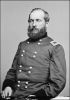 |
Garfield, Jas General fag_
20251108GHLn-
Added by: Lyle Brennen on 18 Feb 2023
Brig. Gen. James A. Garfield, officer of the Federal Army
Library of Congress
https://www.loc.gov/pictures/resource/cwpb.06455/
In the summer of 1861, after the outbreak of the American Civil War, he received a commission as a Lieutenant Colonel in the Union Army and given command of the 42nd… |
|


 1867 - 1947 (80 years)
 [1]
[1] 


