| Name |
Hawley, Enos [1, 2, 3] |
- 20250809GHLn-
Harriet H Wells
in the Pennsylvania, U.S., Death Certificates, 1906-1972
Name Harriet H Wells
[Harriet H Hawley]
Race White
Gender Female
widowed
her Age 92y3m25d
Birth 1 Apr 1823
Muncy, Pennsylvania
Death 25 Jul 1915 18:00h
138 East Fifth ST Bloomsburg, Columbia, PA
cause Dysentery
14
R.E. Miller, MD
Boomsburg
Father Enos Hawley
b PA
Mother Mary Sweeny
b PA
inform A.H. Armstrong
Boomsburg
burial July 27 1915
Muncy Cemetery
Cert 63951
Pennsylvania Historical and Museum Commission; Harrisburg, PA, USA; Pennsylvania (State). Death Certificates, 1906-1968; Certificate Number Range: 063671-066890
|
| Birth |
10 Jun 1799 |
Chester County, Pennsylvania, USA  [2] [2] |
|
| Gender |
Male |
| Birth |
10 Jun 1799 |
Montgomery, Lycoming, Pennsylvania, USA [3] |
| ReligionSect |
20 Nov 1822 |
Lycoming County, Pennsylvania, USA [1] |
| Pre-Separation- An offering was presented signed by Enos Hawley condemning his outgoing in marriage which being read was left for further consideration at our next mo meeting and the committee in his case are requested to take another opportunity with him & report threreof. |
- 20250809GHLn-
Enos Hawley
in the U.S., Quaker Meeting Records, 1681-1935
page 120
Name Enos Hawley
Event Marriage
Marriage Lycoming, Pennsylvania
20 Nov 1822
Res on
Image 20 1822 Eleventh
mo Mtg Pennsdale and Muncy Monthly Meetings
Sect Pre-Separation/Orthodox
Yearly Meeting Philadelphia Yearly Meeting
Meeting State Pennsylvania
Meeting County Lycoming
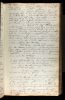
An offering was presented signed by Enos Hawley condemning his outgoing in marriage which being read was left for further consideration at our next mo meeting and the committee in his case are requested to take another opportunity with him & report threreof.
Haverford College; Haverford, Pennsylvania
|
| Residence |
20 Nov 1822 [1] |
| QuakerMonth: Eleventh |
| Event |
Apr 1842 |
Muncy, Lycoming, Pennsylvania, USA |
| The Muncy riot of 1842: Abolitionists vs. 18 angry rioters by Don Everett Smith Jr. |
- 20250809GHLn-
The Muncy riot of 1842: Abolitionists vs. 18 angry rioters
by Don Everett Smith Jr.
Photo-
Abraham Updegraff, left, and Enos Hawley, right.
Enos Hawley was a local tanner and postmaster in Muncy who died at 84 in 1881. He is interred at the Muncy Cemetery with a rectangular stone that simply states his name and his date of birth and death – “June 10, 1799” and “Oct. 3, 1882.”
In their 2003 book “Williamsport: Boomtown on the Susquehanna,” Robin Van Auken and Louis E. Hunsinger Jr., described Hawley as being “not shy about his revulsion” of slavery.
On one April night in 1842, he was the center of a riot in Muncy. He, and several Quakers, had invited an orator to speak about the abolition of slaves.
Some locals reacted angrily and forced the speaker and audience members to Hawley’s house, where they hid from their attackers. In the aftermath, 18 men would be arrested for their involvement.
An account of this incident could be found in the local history publication, Now and Then (specifically volume 7 page 29 printed in 1942). It was originally shared by local lawyer Marshall Reid Anspach.
He had received word of an indictment of those 18 individuals. Anspach then spent “a great many hours” where he was able to locate several documents related to the incident. Yet, when he searched through the Muncy Luminary of that year, he was unable to find any mention of it.
“I failed to find so much as a single word concerning the matter. It seemed as though the subject was too hot a political potato for the paper even to mention,” Anspach said.
However, thanks to more research Anspach was able to piece together an account.
The riot
Nine of the 18 persons listed were: James Merrill, Thomas Harlan, Samuel Doctor, Jr., William Risk, Nathaniel Smith, Henry Antes, Jonathan Willetts, Thomas Brass and Robert Ray. Each of them had stoned the schoolhouse where the lecture occurred. It broke out the windows, struck the lecturer and Hawley.
At this point in the narrative of the incident, Abraham Updegraff served as a member of the jury that heard the trial. He wrote about his experience in a memoir about his father called “Sketch of the Life of the Late Thomas Updegraff.”
Thomas Updegraff described how the speaker, Hawley, and the meeting attendees fled, the 18 had “thrown baskets full of eggs” thus “bespattering them.”
After reaching Hawley’s home, the rioters “made violent assaults on the doors and windows of the house.” They also harassed the abolitionists with gong and banged it at the front of the house “until after midnight” … “while using all kinds of abusive language coupled by threats.”
The trial
Eventually, they were caught and indicted in August of 1842. They were sent to trial in September and October. The prosecution was able to produce witnesses and evidence.
“A number of witnesses were examined by the Commonwealth, all telling the same story, without variations,” Anspach said.
Yet the defense “produced no witnesses” and “made long, frothy speeches.” The defense charged that the Quakers were “active in stirring up the worst passions of the slaves in the Southern States.”
The lawyers for 18 went so far as to say the slaves “would be happy, smooth, fat, and sleek never dreaming…for liberty.” They added that “if it (freedom) could be obtained,” that the slaves “were not capable of enjoying it.”
Updegraff said the lawyers for the 18 called the abolitionists “poisonous asps, stinging the body politic to death.”
Upon hearing these remarks, F.C. Campbell, who served as a lawyer for the Commonwealth, said that between the proof of the prosecution and the “frothy” speech the defense’s lawyers gave, a closing statement was not needed.
The jury was then given the case, but upon sitting down and casting the first ballots, it resulted in “ELEVEN for acquittal…and ONE for conviction.”
Upon being questioned, it was Updegraff who voted for their conviction.
“You are a young man and you can’t expect eleven of us to yield our views of right to yours,” the foreman said.
Updegraff responded, “If the learned judge had instructed us that if we believed the evidence we must convict, and there was no contradictory evidence offered by the defendants.”
A second ballot was taken and this time it came up six for innocent and six for conviction.
Updegraff had been an abolitionist, and he was asked to explain his beliefs. He said that many of them had been Quakers and were the “most peaceable, orderly folks that could be found in any country.” He described them as “shrinking from notoriety” and were more interested in being “beloved and prized by God alone.”
After another ballot, it was nine for conviction and three for innocent. A fourth and final ballot was taken and Updegraff said it “was solid for conviction.”
Pardon from the governor
However, this conviction would not stand. The 18 men would be pardoned by then Governor David Porter. In a statement Porter wrote dated Sept. 6, 1842, he said an “itinerant lecturer came to the town of Muncy.”
The speaker’s comments were considered “pernicious to the cause of public morals, and destructive to all the cherished interests of society.” The lecture contained “equally alarming and (the) destructive doctrine of the dissolution of the Union of the States.”
At the conclusion of the incident, Updegraff referred to Porter as “Previous Pardon Porter.” Thanks to his involvement, the men were never sentenced.
However, Updegraff would go on to be remembered for his kindness and generosity.
Updegraff: Famed abolitionist has not faded as local legend
‘Man of integrity and morality’
Hawley was not forgotten.
In the “History of Lycoming,”edited by John Megginess, Hawley was “remembered and honored” as a “man of integrity and morality.” “He was the first man in the community who had the courage to vote for the Abolition ticket.”
He was described as having the “mental make-up” of famed abolitionist John Brown. However his “sympathy with the Friends” (or Quakers) kept his views on war as “not in the same spirit aggressive” as Brown’s.
The equal temperament was one of the reasons he was appointed “postmaster of Muncy” from July 9, 1861, to March 12, 1873.
Author
Don Everett Smith Jr.
https://onthepulsenews.com/the-muncy-riot-of-1842-abolitionists-vs-18-angry-rioters/
____________
The Luminary
The Muncy Abolition Riot of 1842 – a sign of the times
By Staff | Feb 7, 2019
Editor’s Note: The following is a recap of Muncy when the town was facing racial tensions in the mid 1800s as we pay homage to Black History Month.
MUNCY – The small quiet Susquehanna River community of Muncy became a focal point of racial tensions over 175 years ago, a violent sign of the times and a flashpoint over an issue that already had begun to divide the nation.
The incident over the abolition of slavery involved a mob eruption that came to be known as the Muncy Abolition Riot of 1842.
An account of the riot is chronicled in several publications, including “Riots, Rumors, and Stories: The Underground Railroad Period in Pennsylvania’s Heartland” and in the April 1942 edition of “Now and Then” by Marshall Reid Anspach.
In those years before the Civil War, the question of slavery ignited no shortage of debate and emotions throughout the North as well as the South.
Enter Enos Hawley, a Quaker and one of the community’s most prominent citizens, who invited a speaker, whose name has been lost to the annals of history, to come talk to townspeople.
What is known about the speaker is that he, like Hawley, was a fervid abolitionist.
Unfortunately, the greeting the two men received from some angry townspeople when they showed up at a schoolhouse in April of that year for the anticipated speech was not a welcome one.
More than a dozen men pelted the schoolhouse with rocks and other objects, damaging the building and injuring Hawley and the speaker. The two then were chased by the mob to Hawley’s house at Main and High Streets where they continued to be assaulted with eggs.
Eighteen rioters eventually were charged and then put on trial in September of that year. Thirteen of the 18 members were convicted, but only after going back and forth among the jurors.
One member of the jury, Abraham Updegraff later described the secret deliberations, noting how an initial ballot came back 11 for acquittal and one for guilty.
Updegraff, reportedly an abolitionist, later convinced other jurors to reconsider their ballots for acquittal. Eventually the jury reached a decision to convict.
However, in a rather unusual move, Gov. David Rittenhouse Porter stepped forward just days after the trial, making a decision to annul the convictions.
He noted that the prosecution was the result of accomplishing political ends rather than to serve the cause of law and order.
He also blamed the abolitionist speaker for causing the disorder as his words were “notoriously offensive to the minds of those they were addressed.”
For his decision to overturn the jury verdict, Porter earned the derisive nickname, “The Pardoning Governor.”
Many other events of the period demonstrated just how emotional the question of slavery was at the time.
According to “Riots, Rumors, and Stories,” mob violence against abolitionists increased in the years just prior to the Muncy incident.
Pennsylvania Hall in Philadelphia, a site of abolitionist meetings, was set afire, and William Lloyd Garison, an abolitionist speaker, was attacked in Boston and dragged through the streets.
Other attacks of abolitionists reportedly occurred on trains.
One of the most famous examples of violence occurred when abolitionist Elijah Lovejoy was attacked and assassinated, becoming in effect the first great martyr of the anti-slavery movement.
As written in “riots, Rumors and Stories”: “This period in the history of abolitionism is significant because it demonstrates that the anti-slavery movement of the late 1830s had, in the perception of many Northern whites as radicals who were going to create disorder.”
The slavery question continued to create tensions throughout the nation, eventually causing a deeper rift between the North and South where slavery was allowed.
Finally, the Civil War otherwise known as the War Between the States, started in 1861. The four year war between the North and the South would become the bloodiest in the nation’s history.
Before it officially ended in April 1865 with the surrender at Appomattox, roughly 2 percent of the nation’s population, an estimated 620,000 men, lost their lives in the line of duty.
https://www.muncyluminary.com/your-community/peeks/2019/02/07/the-muncy-abolition-riot-of-1842-a-sign-of-the-times/
|
 |
Hawley, Enos & Updegraff
20250809GHLn-
The Muncy riot of 1842: Abolitionists vs. 18 angry rioters
by Don Everett Smith Jr.
Photo-
Abraham Updegraff, left, and Enos Hawley, right.
Enos Hawley was a local tanner and postmaster in Muncy who died at 84 in 1881. He is interred at the Muncy Cemetery with a rectangular stone that simply states his name and his date of birth… |
| Death |
2 Oct 1881 |
Pennsylvania, USA [2] |
| Death |
3 Oct 1881 |
Muncy, Lycoming, Pennsylvania, USA [3] |
- 20250809GHLn-
Enos Hawley
Photo added by gloria (glo) wolf
Enos Hawley
Birth 10 Jun 1799
Montgomery, Lycoming County, Pennsylvania, USA
Death 3 Oct 1881 (aged 82)
3 Oct 1882?
Muncy, Lycoming County, Pennsylvania, USA
Burial Muncy Cemetery
Muncy, Lycoming County, Pennsylvania, USA
GPS- Latitude: 41.2029845, Longitude: -76.7814726
Plot A 56 grave # 3 interment # 236
Memorial ID65272662 ·
Photos 1
Flowers 0
Family Members
Parents
Robert Hawley
1762–1829
Patience Yearsley Hawley
1760–1828
Spouse
Mary Sweeney Hawley
1795–1872 (m. 1822)
Siblings
Gideon Hawley
1791–1858
Anna Hawley Haines
1793–1853
Robert Hawley
1797–1861
Mary H. Hawley Yearsley
1805–1870
Hannah Hawley Whitacre
1807–1887
Children
Harriet Hawley Wells
1823–1915
Milton J. Hawley
1825–1901
Robert Hawley
1827–1905
Lucretia U. Hawley Bodine
1831–1877
Alfred Hawley
1833–1908
Flowers
- age 82 findagrave doc
|
| Burial |
Aft 3 Oct 1881 |
Muncy Cemetery, Muncy, Lycoming, Pennsylvania, USA [3] |
| Death |
3 Oct 1882 |
Muncy, Lycoming, Pennsylvania, USA [3] |
| age 83 headstone says 1882, not 1881 |
- 20250809GHLn-
Enos Hawley
Photo added by gloria (glo) wolf
Enos Hawley
Birth 10 Jun 1799
Montgomery, Lycoming County, Pennsylvania, USA
Death 3 Oct 1881 (aged 82)
3 Oct 1882?
Muncy, Lycoming County, Pennsylvania, USA
Burial Muncy Cemetery
Muncy, Lycoming County, Pennsylvania, USA
GPS- Latitude: 41.2029845, Longitude: -76.7814726
Plot A 56 grave # 3 interment # 236
Memorial ID65272662 ·
Photos 1
Flowers 0
Family Members
Parents
Robert Hawley
1762–1829
Patience Yearsley Hawley
1760–1828
Spouse
Mary Sweeney Hawley
1795–1872 (m. 1822)
Siblings
Gideon Hawley
1791–1858
Anna Hawley Haines
1793–1853
Robert Hawley
1797–1861
Mary H. Hawley Yearsley
1805–1870
Hannah Hawley Whitacre
1807–1887
Children
Harriet Hawley Wells
1823–1915
Milton J. Hawley
1825–1901
Robert Hawley
1827–1905
Lucretia U. Hawley Bodine
1831–1877
Alfred Hawley
1833–1908
Flowers
|
| Occupation |
Muncy, Lycoming, Pennsylvania, USA |
| Postmaster- Hawley went on to serve as postmaster in the nearby borough of Muncy. |
- 20250809GHLn-
History
Franklin Township, named for Benjamin Franklin, was formed from part of Moreland Township in 1822. It included what is now Jordan Township until that was formed 32 years later. Another portion of Franklin Township was cut away in 1828 to form Penn Township.[4]
The earliest settlers to Franklin Township were farmers. They arrived in the early 19th century and cleared the hills and valleys. Many of the farms established by these early settlers are still thriving today. Other important business ventures in Franklin Township included a large tannery on Little Muncy Creek just south of Lairdsville and the lumber industry which swept throughout north central Pennsylvania during the mid-to-late 19th century. Thousands of acres of old-growth forests were stripped to the ground. The logs were floated down the streams to one of the many sawmills that were spread along the banks of Little Muncy Creek.[4] Today the forests of Franklin Township have regrown, providing an excellent habitat for white-tailed deer, black bear and turkey.
Enos Hawley, born in Chester County, was one of the first citizens in Lycoming County publicly to state an opposition to slavery. He was a member of the Religious Society of Friends. The Quakers were firmly against slavery and were noted for the assistance they provided the abolitionist movement in the years preceding the Civil War. Hawley was raised in Franklin Township in the vicinity of Lairdsville, which is the only village in the township. Hawley went on to serve as postmaster in the nearby borough of Muncy.[4]
|
| Religion |
Lycoming County, Pennsylvania, USA |
| Quaker- Enos Hawley, born in Chester County, was one of the first citizens in Lycoming County publicly to state an opposition to slavery. He was a member of the Religious Society of Friends. |
- 20250809GHLn-
History
Franklin Township, named for Benjamin Franklin, was formed from part of Moreland Township in 1822. It included what is now Jordan Township until that was formed 32 years later. Another portion of Franklin Township was cut away in 1828 to form Penn Township.[4]
The earliest settlers to Franklin Township were farmers. They arrived in the early 19th century and cleared the hills and valleys. Many of the farms established by these early settlers are still thriving today. Other important business ventures in Franklin Township included a large tannery on Little Muncy Creek just south of Lairdsville and the lumber industry which swept throughout north central Pennsylvania during the mid-to-late 19th century. Thousands of acres of old-growth forests were stripped to the ground. The logs were floated down the streams to one of the many sawmills that were spread along the banks of Little Muncy Creek.[4] Today the forests of Franklin Township have regrown, providing an excellent habitat for white-tailed deer, black bear and turkey.
Enos Hawley, born in Chester County, was one of the first citizens in Lycoming County publicly to state an opposition to slavery. He was a member of the Religious Society of Friends. The Quakers were firmly against slavery and were noted for the assistance they provided the abolitionist movement in the years preceding the Civil War. Hawley was raised in Franklin Township in the vicinity of Lairdsville, which is the only village in the township. Hawley went on to serve as postmaster in the nearby borough of Muncy.[4]
|
| Person ID |
I106944 |
WETZEL-SPRING |
| Family 1 |
Sweeney, Mary, b. 9 Sep 1799, Pennsylvania, USA d. 7 Sep 1872, Muncy, Lycoming, Pennsylvania, USA (Age 72 years) |
| Marriage |
20 Nov 1822 |
| _SEPR |
20 Nov 1822 |
Lycoming County, Pennsylvania, USA [1] |
| pre-separation- An offering was presented signed by Enos Hawley condemning his outgoing in marriage which being read was left for further consideration at our next mo meeting and the committee in his case are requested to take another opportunity with him & report threreof. |
- 20250809GHLn-
Enos Hawley
in the U.S., Quaker Meeting Records, 1681-1935
page 120
Name Enos Hawley
Event Marriage
Marriage Lycoming, Pennsylvania
20 Nov 1822
Res on
Image 20 1822 Eleventh
mo Mtg Pennsdale and Muncy Monthly Meetings
Sect Pre-Separation/Orthodox
Yearly Meeting Philadelphia Yearly Meeting
Meeting State Pennsylvania
Meeting County Lycoming
An offering was presented signed by Enos Hawley condemning his outgoing in marriage which being read was left for further consideration at our next mo meeting and the committee in his case are requested to take another opportunity with him & report threreof.
Haverford College; Haverford, Pennsylvania
|
| Children |
| | 1. Hawley, Harriett, b. 1 Apr 1823, Muncy, Lycoming, Pennsylvania, USA d. 25 Jul 1915, Bloomsburg, Columbia, Pennsylvania, USA (Age 92 years) [Father: natural] [Mother: natural] |
| | 2. Bodine, Lucretia U., b. 3 Dec 1831 d. 4 Oct 1877, Muncy, Lycoming, Pennsylvania, USA (Age 45 years) [Father: natural] [Mother: natural] |
| | 3. Hawley, Milton J., b. 26 Jun 1825, Muncy, Lycoming, Pennsylvania, USA d. 19 Mar 1901, Watsontown, Northumberland, Pennsylvania, USA (Age 75 years) [Father: natural] [Mother: natural] |
| | 4. Hawley, Alfred, b. Nov 1833, Lycoming County, Pennsylvania, USA d. 18 May 1908, Northumberland County, Pennsylvania, USA (Age 74 years) [Father: natural] [Mother: natural] |
| | 5. Hawley, Robert, b. 6 Oct 1827, Muncy, Lycoming, Pennsylvania, USA d. 30 Sep 1905, Williamsport, Lycoming, Pennsylvania, USA (Age 77 years) [Father: natural] [Mother: natural] |
|
| Family ID |
F60668 |
Group Sheet | Family Chart |

 1799 - 1881 (82 years)